
REVIEW · DENMARK HARBOUR CRUISES
Aarhus: Harbour Cruises with local guide
Aarhus Harbour is where Viking stories, daring modern buildings, old wooden ships, and tiny million-kroner summer homes all meet. This 75-minute cruise gives you a quick look at the city from the water, with a live guide explaining what you are seeing in English, German, or Danish.
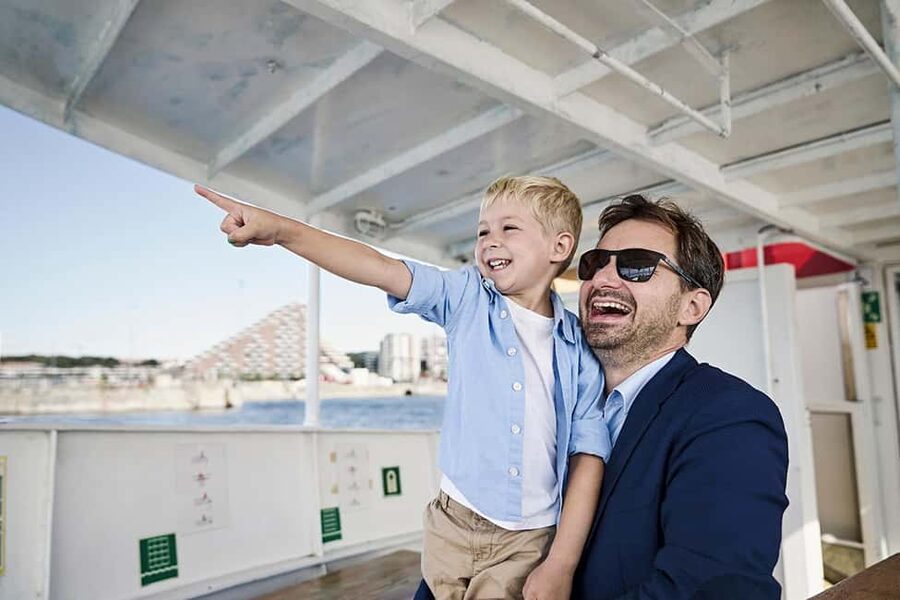
I like the mix of local history and new architecture, and I like that children are not treated as extra baggage. Kids may get a chance to steer the boat and receive a certificate, a small touch that can make the outing the highlight of their day.
The main consideration is pace. You cover a lot of harbourfront in just over an hour, so this is more of a lively overview than a slow, detailed history lesson. The tour is also most rewarding when you can see clearly from the deck or windows, so weather may affect the experience.
Key points at a glance
- The tugboat Jacob has a D-Day connection: This old working boat was built in Texas in 1943 and took part in the Normandy landings.
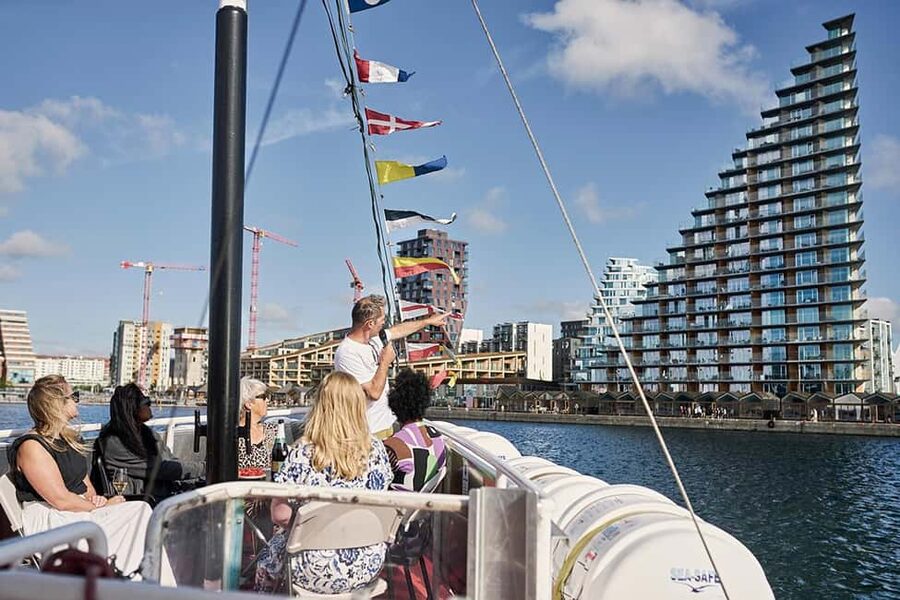
- Aarhus Ø gives you the sharpest modern views: You pass The Iceberg and the Lighthouse, Denmark’s tallest building at 142 metres.
- Children get a real role: Kids can steer the ship, and a certificate at the end adds a memorable finish.
- The wooden ship harbour feels genuinely old-school: Around 70 historic wooden vessels are kept here, forming the largest wooden ship harbour in the Nordic countries.
- The boat is practical as well as comfortable: There is a bar with hot and cold drinks, snacks, toilets, child activities, and wheelchair access.
- The meeting point is easy to find: Look behind the Endless Connection fountain near DOKK1 and the old Customs House.
Starting behind the Endless Connection fountain
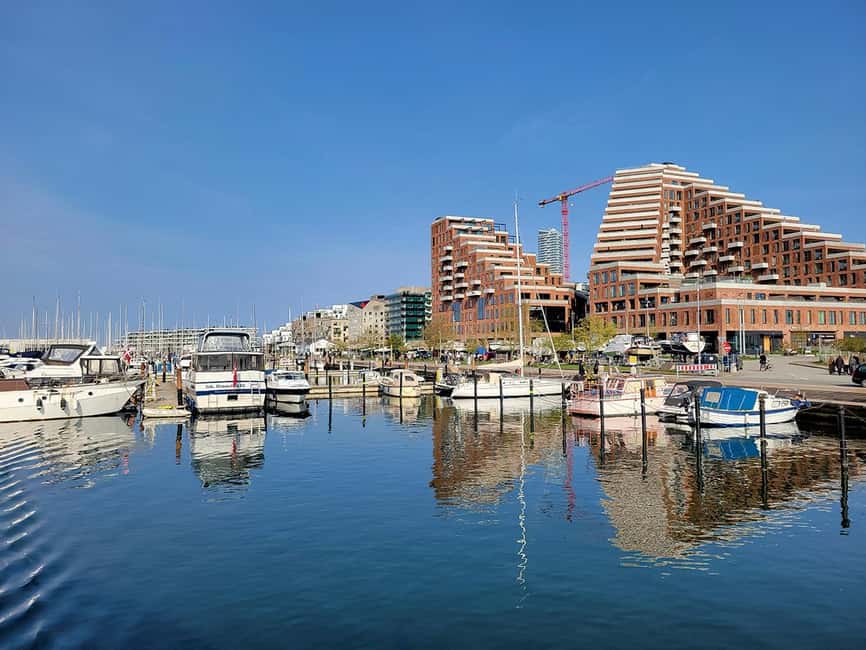
The ship lies behind the Endless Connection fountain, a useful landmark in the centre of Aarhus Harbour. The fountain is made for movement, with water running through a maze of connected forms. In summer, children play among its paths, so allow a little time to find the boat if your group includes young children.
Nearby is Sirene, the rounded sculpture created by Prince Henrik of Denmark. It is an organic piece, and its smooth form fits the open harbour setting. These details matter because the tour begins before you board. You are already looking at public art, civic buildings, and old harbour spaces before the boat leaves.
The area around DOKK1 is easy to recognise. DOKK1 holds Aarhus’s main library and citizen service centre, and a huge bell sits outside. Local custom says the bell is rung when a new resident of Aarhus is born. It is a simple detail, but it gives the modern waterfront a human connection.
The ship is wheelchair accessible, including the toilets. That makes this a useful choice for mixed groups, especially when someone wants a harbour view without dealing with uneven walking routes along the waterfront. Since the exact boarding arrangement can depend on the boat and the day, it is still sensible to arrive early and ask the crew for help if needed.
More Guided Trips in the world:
- Seattle’s Original Guided Harbor Cruise
★ 4.5 · 2,077 reviews - Rotterdam: Harbor Cruise with Live Guide
★ 4.0 · 1,270 reviews - Seattle: Harbor Cruise with Local Guide
★ 4.8 · 599 reviews
Customs House, DOKK1, and the Viking mouth of the river
As the boat moves out, you get a good view of the old Customs House, built in 1897 by architect Hack Kampmann. Kampmann often drew on fairy tales and mythology, and that interest shows in his buildings. The Customs House gives you a strong contrast with the newer structures around DOKK1.
The guide connects the harbour to Aarhus’s Viking name, Aros, meaning the city at the mouth of the river. That location was not just useful for trade. It also had a defensive role. When smoke signals appeared from Mols Bjerge, the people of Aros could take up weapons and row into battle.
I like this part of the route because it explains why the harbour exists where it does. You are not simply looking at water and buildings. You are seeing the point where river, sea, trade, defence, and city life came together.
The fairy-tale thread returns in the stories about Aarhus and the old tugboat Jacob. Children may enjoy the adventure angle, while adults get a compact lesson in how the port changed over time.
The tugboat Jacob and the harbour’s working past
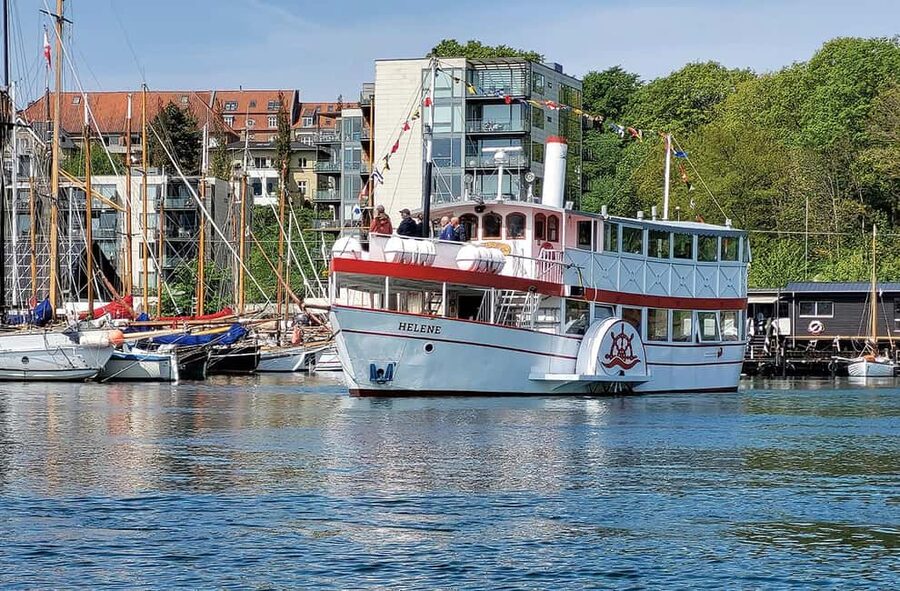
Jacob is an old tugboat with a history far beyond Aarhus. Built in Texas in 1943, it took part in D-Day, the Normandy landings. That gives the vessel a direct link to one of the defining events of the Second World War.
A tugboat is easy to overlook beside large modern buildings, but this is one of the more useful moments on the cruise. The guide turns an ordinary harbour object into a piece of international history. You also get a reminder that ports are places of work, not just scenery.
The route includes old fishing boats and houseboats. Many of the fishing boats are now used as hobbies rather than for commercial work. The houseboats remain permanently moored, but they must still have a working engine. That is a fun rule and a practical glimpse into how life on the water is managed.
Old auction halls have been converted into restaurants. This is a familiar harbour change, but here you can see the shift clearly: boats once brought in fish for sale, and the same waterfront now supports food, leisure, and housing.
Wall art and stories told in large scale
The cruise also passes large murals, including a work connected with the United Nations Sustainable Development Goals and A Miner from Novosibirsk. These are not small decorative pieces. Their scale suits the wide harbour walls, and they add a public-art layer to the route.
The mural about a miner is described as showing the beauty of a life lived. That gives the guide a chance to talk about people and work, not just buildings. If you enjoy city art, this section helps explain why Aarhus’s waterfront is more than a collection of new apartment blocks.
You will want to keep looking in several directions here. The boat gives you a moving view, so a mural can disappear quickly as the ship continues. Sit where you can turn easily, and keep your camera ready rather than waiting for a long stop.
A few more trips on the water in the world worth a look
- NYC: Circle Line 2h Harbor Lights Cruise Skip-The-Box-Office
★ 4.6 · 8,222 reviews - Hamburg: 90-Minute Evening Lights Harbor Cruise
★ 4.5 · 7,728 reviews - Hamburg: 1-Hour Evening Harbor Lights Cruise
★ 4.4 · 5,073 reviews - San Francisco: Golden Gate Bay Cruise
★ 4.7 · 3,644 reviews
Bjarke Ingels buildings and 21-square-metre summer homes
One of the tour’s strongest sections concerns the buildings linked to architect Bjarke Ingels. You pass small summer homes measuring only 21 square metres. Their size may sound modest, but the price is not: each costs about DKK 2.8 million.
That detail says a lot about Aarhus Harbour. Waterfront space is limited, and even a tiny private retreat can command a serious sum. You get a sharp lesson in the value of location, with the water doing much of the selling.
The building called Aarhus is shaped like two letter A’s. It contains 250 apartments, and every one has a terrace or roof garden. From the water, the shape is easier to understand than it would be from a city street. The harbour gives you the proper viewing distance.
Then comes The Campanile, a clock tower with 75 apartments. Its clock face is larger than Big Ben’s, and the building is covered in copper. Over time, the copper changes colour toward an iridescent green.
This is a good example of why the boat is useful. You see the full outline of the buildings, not just one entrance or façade. The guide can point out the design choices while you watch the structures shift against the skyline.
Aarhus Ø, The Iceberg, and Denmark’s tallest building
Aarhus Ø, or Aarhus East, is the city’s new district on the sea. The architecture is bold and sometimes intentionally unusual. The Iceberg contains 210 apartments and has a jagged profile designed to resemble its namesake.
The Lighthouse reaches 142 metres and is Denmark’s tallest building. From the water, its height makes sense in relation to the rest of the district. You can see how the new neighbourhood pushes the city outward onto the harbour.
This is likely the most impressive part of the trip for anyone interested in architecture, city planning, or new housing. It also raises practical questions. The district is striking, but it feels very different from the old Customs House, fishing boats, and wooden vessels seen elsewhere on the route.
The guide helps connect these contrasts. Aarhus is not presented as a preserved old town beside a separate modern quarter. The cruise shows the city as a place that keeps rebuilding its waterfront while retaining pieces of its working past.
The bathing establishment that caused an outcry
The route passes a bathing establishment dating from 1933. It was the first place in Aarhus where men and women were allowed to bathe together, and the idea caused an outcry at the time.
That story gives the harbour a social history that buildings alone cannot provide. It shows how ordinary activities, such as swimming, could become arguments about public behaviour and changing ideas.
The bathhouse also adds a lighter moment to the tour. Not every stop needs a grand historical event. Some of the best local stories explain how people lived, argued, and spent their free time.
Sailing, houseboats, and the wooden ship harbour
The Aarhus International Sailing Centre is another highlight. It is an example of Danish architecture and a training base for elite sailors, including Olympic gold medallist Anne-Marie Rindom.
You can also see the Wooden Ship Harbour, the largest harbour of its kind in the Nordic countries. Around 70 historic wooden ships are kept there. The harbour is treated as living cultural heritage, which means the vessels remain part of an active place rather than sitting only as museum objects.
This section should appeal to you if you like working boats and maritime traditions more than polished new construction. It also slows the visual rhythm of the tour. After the sharp angles of Aarhus Ø, the wooden vessels offer a more hands-on sense of the port’s past.
The marina remains active throughout the year. Above the harbour is Klintegården, built in the 1930s by engineer Ove Christensen. Its modernist design was influenced by German ideas, and it shows that forward-looking architecture was already part of Aarhus before the latest waterfront projects.
What the onboard experience is like
The ship is described as comfortable and cosy, with the basic conveniences you need for a 75-minute outing. A bar serves hot and cold drinks and snacks, which is useful on a cool Danish day or for families who need a small break.
The live guide speaks English, German, or Danish. The information covers history, buildings, art, ships, and local customs, so the trip is not limited to one subject. You should expect a broad route with plenty of short stories rather than a detailed lecture on any single building.
Children receive extra attention. The chance to steer the boat has been a major success with younger passengers, and a certificate at the end gives them something concrete to take home. A visit to the captain is also part of the child-friendly appeal.
The family focus does not make the cruise unsuitable for adults. Adults who enjoy city design, wartime history, maritime life, or local traditions will find plenty to follow. Still, if you want a quiet, highly formal sightseeing cruise, the child activities may make the atmosphere livelier than expected.
Is $25 a fair price for 75 minutes?
At $25 per person, this is a reasonable way to see a large stretch of Aarhus waterfront without walking the whole route. The value comes from the combination of transport, guided interpretation, architecture, maritime history, and access to views you cannot get from the quayside.
It is especially good value for families because the price includes more than passive sightseeing. The child activities, chance to steer, captain visit, and certificate give younger passengers a reason to stay engaged.
The cruise is less useful if you already know Aarhus Harbour well or want a long stop at each sight. You do not get a full museum visit or a detailed architectural tour. Think of it as a well-packed introduction that helps you decide which parts of the harbour deserve a closer look later.
Free cancellation up to 24 hours before departure and the option to reserve now and pay later make it easier to fit into a changing schedule. Check available departure times when booking, since the cruise lasts 75 minutes and the start times vary.
Who should book the Aarhus Harbour cruise?
I would choose this for a first visit to Aarhus, a family day out, or a short city break when you want orientation without a long walk. It also suits anyone curious about the contrast between Viking-era origins, old working vessels, 1930s modernism, and today’s high-rise harbour district.
The tour is a particularly good match for children who enjoy vehicles, boats, and hands-on activities. Wheelchair users can also consider it because the ship and toilets are wheelchair accessible.
You may want a different activity if you prefer a slow, specialised tour focused only on architecture or only on maritime history. The strength here is the range. The route keeps changing, and the guide moves from fairy tales to D-Day, from public art to luxury waterfront housing, and from old fishing boats to Denmark’s tallest building.
Should you book this cruise?
Yes, if you want a friendly overview of Aarhus from the water and value a mix of history, local stories, and modern design. The best reasons to book are the well-packed route, the unusual story of Jacob, the view of Aarhus Ø, and the strong child-friendly touches.
At $25, it offers solid value for 75 minutes, particularly for families and first-time visitors. Just keep your expectations realistic: this is a broad harbour tour, not an in-depth seminar. If that sounds right for your day in Aarhus, meet the ship behind the Endless Connection fountain and enjoy the city from its waterfront side.
FAQ
How long does the Aarhus Harbour cruise last?
The cruise lasts 75 minutes, or one hour and 15 minutes.
Where does the boat leave from?
The ship lies behind the Endless Connection fountain in Aarhus Harbour.
What languages does the guide speak?
The live guide can provide the tour in English, German, or Danish.
Is the cruise wheelchair accessible?
Yes. The ship has wheelchair-friendly access and accessible toilets.
Is food or drink available on board?
Yes. There is a bar serving hot and cold beverages and snacks.
Are children welcome on the cruise?
Yes. The experience includes child activities, and children may get the chance to steer the boat. A certificate is provided at the end.
What are some of the main sights from the boat?
You can see the old Customs House, DOKK1, Aarhus Ø, The Iceberg, The Lighthouse, the Aarhus International Sailing Centre, the Wooden Ship Harbour, Klintegården, old fishing boats, and houseboats.
Does the cruise pass the tugboat Jacob?
Yes. The old tugboat Jacob is part of the route and is linked to the D-Day landings. It was built in Texas in 1943.
Can I cancel my booking?
You can cancel up to 24 hours in advance for a full refund. You can also reserve now and pay later.
New on the water in the world
- Around the Bay Sightseeing and Bay Cruise★ 5.0 · 24 reviews
- Luxury Harbour Ocean Boat Cruise★ 4.5 · 14 reviews
- Galveston Historical Harbor Tour – Maritime & Heritage Cruise★ 4.5 · 29 reviews
- Unrivalled Coastal Tour to Saint’s Bay Harbour★ 4.5 · 29 reviews
- Private Hamad Port Tour in Mesaieed |Aquarium |Maritime Museum★ 5.0 · 3 reviews
- Amber Cove and Taino bay Cruise Ship – Waterfalls of Damajagua★ 4.0 · 9 reviews
- Montenegro Bay Cruise with Lunch on the Boat day trip★ 4.0 · 21 reviews
- Monday & Thursday Nights Harbor Lights Tiki Tour★ 4.5 · 10 reviews
Denmark Harbour Cruises, compared.
Kayak Tour in Copenhagen Harbor – June, July and August
Read our review →
Guided Harbor Cruise with Iconic Landmarks & Aarhus
Read our review →
Copenhagen Combo: Walking Tour, Harbor Ferry & Royal Guards
Read our review →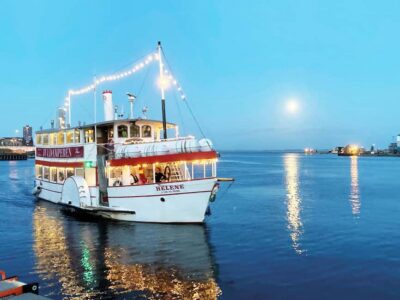
Kayak Tour in Copenhagen Harbor in May and September
Read our review →Browse the lists this tour appears in