
REVIEW · CHARLESTON HARBOR CRUISES
Charleston: Haunted History Harbor Cruise
Charleston’s haunted past feels especially fitting after dark, when the city’s waterfront turns into a stage for tales of pirates, storms, lost fortunes, and restless spirits. I like the way this cruise combines city views with local storytelling, and I like that you reach eerie places that are hard to see on foot. The main tradeoff is simple: this is a story-led harbor ride, not a serious ghost-hunting investigation, so book it for atmosphere and history rather than proof of the supernatural.
I also appreciate the short 90-minute length, which fits neatly into an evening, and the chance to see the Ravenel Bridge and USS Yorktown from the water. Guide Ed has been praised for making Charleston history lively and holding attention for longer than the cruise itself. The boat has a bar for purchased drinks, but alcoholic beverages are not included in the $45 price.
Key points to know before boarding
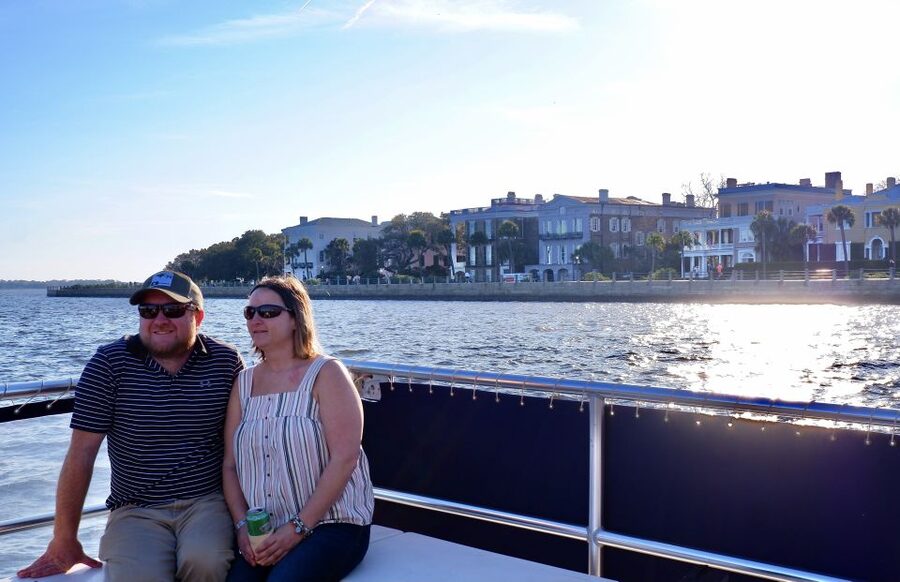
- The Palmetto is a 45-foot powered catamaran, giving you a stable platform for an after-dark harbor ride.
- The stories cover more than ghosts, including pirates, shipwrecks, storms, lost fortunes, wars, and Charleston’s colonial past.
- Pirate lore includes Blackbeard, Stede Bonnet, Charles Vain, Calico Jack Rachem, and Anne Bonney.
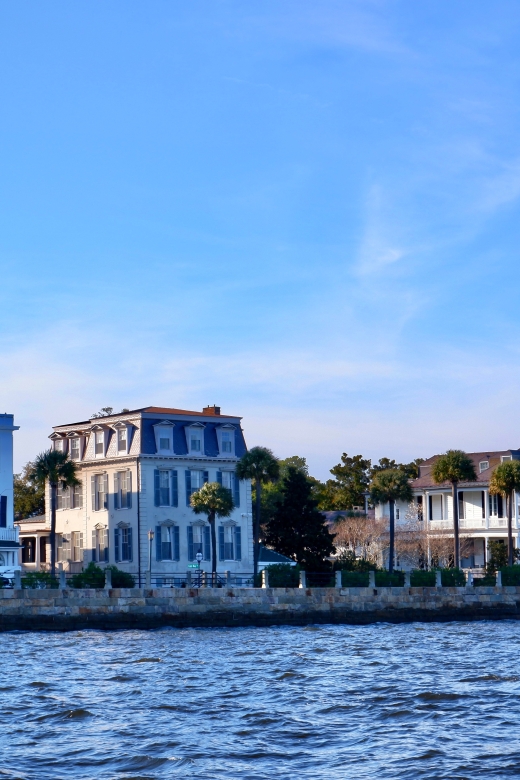
- The route offers nighttime views of the Ravenel Bridge and USS Yorktown, along with the Charleston skyline and waterfront homes.
- Gullah superstitions add local cultural context to the ghost stories and show how folklore developed in Charleston.
- The meeting point is the blue and white Sandlapper Tours ticket booth on the left dock as you approach the water.
Why Charleston Harbor works so well after dark
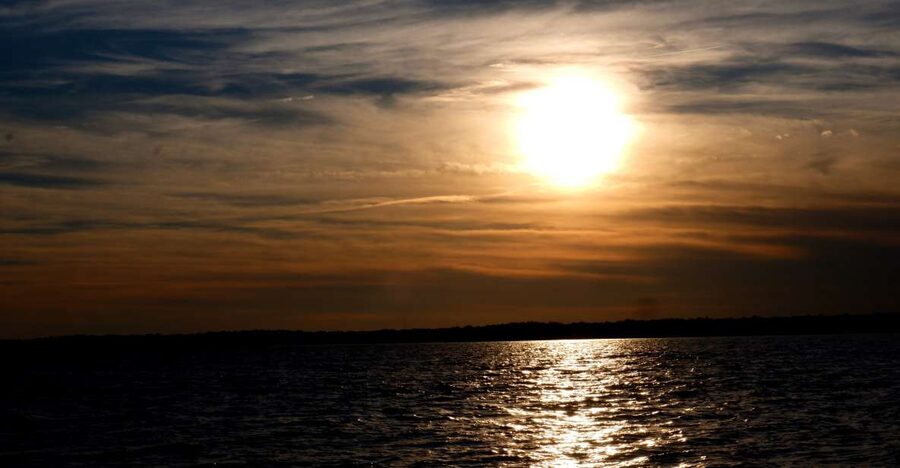
Charleston is often introduced through its pastel houses, church steeples, and cobbled streets. That is only half the picture. From the harbor, you see the city as a port, a military target, a place of trade, and a departure point for ships that never came back.
That wider view gives the cruise its purpose. You are not simply hearing random ghost stories while passing dark buildings. The tales grow from Charleston’s position on the water. Storms damaged ships. Pirates attacked vessels and hid along the coast. Wars changed the harbor. Wealth was made, lost, and sometimes carried away beneath the waves.
I like this setting because the water creates distance from the city. The streets can feel familiar during the day, but the same waterfront looks less certain at night. Lights on the shore, the outline of an old home, or a ship sitting in the dark can give a story more weight without needing theatrical effects.
The mood depends heavily on the guide. Ed has been praised for his enthusiastic delivery and his ability to talk about Charleston history for several hours. That matters here. A good narrator keeps the cruise from becoming a string of recycled ghost jokes and gives you enough background to understand why the legends took root.
More History Tours in Charleston:
- Charleston: Daytime or Sunset Historic Harbor Cruise
★ 4.5 · 1,352 reviews - Charleston: Historic City Tour and Harbor Cruise
★ 4.5 · 260 reviews - Harbor History Tour Aboard the Palmetto
★ 5.0 · 2 reviews
Boarding the Palmetto at the Sandlapper dock
The tour begins at the blue and white Sandlapper Tours ticket booth on the left dock as you get closer to the water. Look for that booth rather than wandering around the waterfront hoping to spot the boat. This is a small but useful detail, especially if you arrive close to the evening departure.
The boat is the Palmetto, a 45-foot powered catamaran. A catamaran gives you a broad, stable platform, which is helpful for a nighttime ride when you are more interested in listening and looking than bracing against every movement of the boat.
The cruise lasts about an hour and a half. That is long enough to give the guide room for several stories and harbor views, but short enough to pair with dinner or another evening activity. I consider the timing one of the stronger parts of the experience. A longer cruise might sound appealing, but ghost stories can lose their force if the narration becomes repetitive.
The boat has an onboard bar where you can purchase drinks. Alcohol is not included in the ticket, so think of that service as an optional extra rather than part of the core value. The included features are the harbor cruise and live narration.
The first stories: storms, ships, and lost fortunes
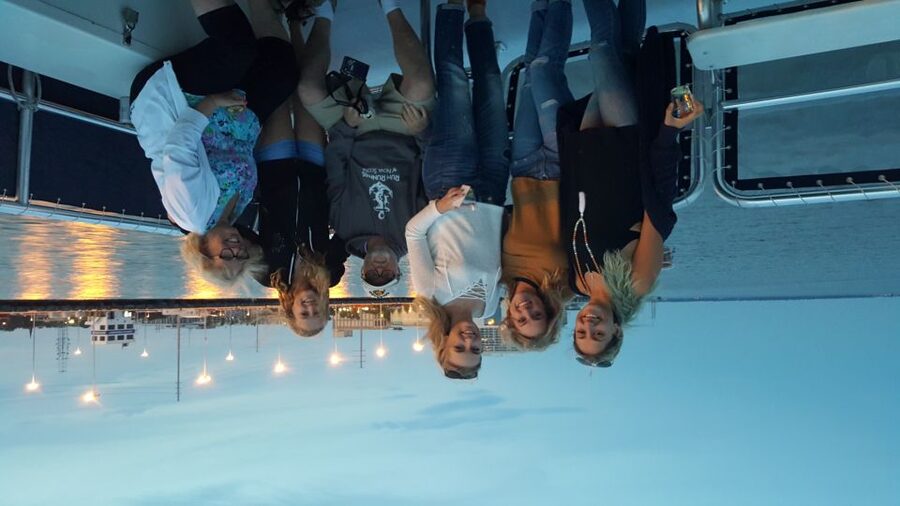
Once the Palmetto moves into the harbor, the guide connects Charleston’s haunted reputation to its maritime past. Expect stories about ships ravaged by storms, fortunes lost at sea, and places where tragedy became part of local memory.
These tales are useful because they give you a sense of how Charleston developed. The city was tied to the sea from its earliest days as part of the American colonies. Its wealth and danger both came through the harbor. Cargo arrived, ships departed, and every voyage carried the risk of weather, accident, conflict, or piracy.
I would pay attention to the way the guide separates broad historical background from local lore. The best moments are not necessarily the most frightening ones. A story about a ship lost in a storm can explain why a stretch of water became feared for generations. A tale about a vanished fortune can show how quickly fact and rumor blended in a port city.
The water also lets you see locations from an angle you cannot get on a walking tour. Some waterfront properties and harbor landmarks are best understood from offshore. At night, the details may be harder to see, but that is part of the mood. You get silhouettes, lights, and a sense of distance instead of a close architectural inspection.
Pirates on the Charleston waterfront
Pirate stories form one of the liveliest parts of the cruise. The narration includes figures such as Blackbeard, Stede Bonnet, Charles Vain, Calico Jack Rachem, and Anne Bonney, described as the first infamous female pirate in the tour’s storytelling.
These names help place Charleston in the rough world of early Atlantic shipping. Pirates were not distant characters from a movie. They were part of the danger faced by ships, merchants, sailors, and coastal settlements. Their reputations grew through attacks, escapes, public fear, and the stories told afterward.
I like this section because it adds variety to the ghost tales. You are not hearing only about spirits lingering in old homes. You are also hearing about real people whose actions created legends while they were alive. The line between historical villain and ghost-story character becomes pleasantly blurry.
Do not expect a museum-style lecture on piracy. This is an evening entertainment cruise, and the stories are selected for atmosphere. Still, the pirate material gives the guide a strong narrative thread. You can picture the harbor as a place of pursuit, concealment, and uncertain loyalties rather than a quiet postcard view.
The inclusion of Anne Bonney is also a useful reminder that women were part of pirate history, even though popular stories often focus almost entirely on men. Her appearance in the tour’s lineup broadens the subject beyond the usual Blackbeard tale.
A few more trips on the water in Charleston worth a look
- Charleston Harbor Sunset Cruise
★ 5.0 · 905 reviews - Charleston: Luxury Harbor Dinner Cruise
★ 4.3 · 786 reviews - Charleston: Sightseeing Harbor Tour & Dolphin Watch
★ 4.5 · 649 reviews - Afternoon Schooner Sightseeing Dolphin Cruise on Charleston Harbor
★ 4.5 · 620 reviews
Haunted homes and ghost lore from the water
The cruise passes antebellum homes and other locations tied to Charleston’s best-known ghost stories. One tale concerns a headmistress who is said to guard the grounds where she once lived. From the water, you hear the story while looking toward the place connected with it.
This format works differently from a walking ghost tour. On foot, you can study a doorway, yard, or street corner at close range. On the boat, you receive a broader view and a little more separation. That distance can make the story feel less like a staged performance and more like a piece of local folklore attached to the city.
The drawback is that nighttime viewing is not ideal for architecture. If you want to examine house details, plaques, or exact building locations, take a daytime historic harbor tour or walking tour as well. This cruise is better at creating a connection between the dark water and the stories than at giving you a detailed architectural survey.
The narrator’s skill is central here. Ed has been singled out for his energy and for knowing enough Charleston history to keep the tales grounded. You might find that the historical context becomes as interesting as the supernatural material. That is a good sign for anyone who enjoys stories but does not need to believe every haunting.
Gullah culture and the meaning of superstition
One of the more valuable elements is the attention to superstitions connected with Charleston’s Gullah culture. This gives the cruise a cultural layer that many basic ghost tours skip.
Gullah traditions grew within the African American communities of the coastal South. In the context of this cruise, the focus is on beliefs and superstitions that became part of local storytelling. These ideas help explain why some places, actions, and events gathered special meaning over time.
I appreciate this portion because it keeps the tour from treating every ghost story as a simple scare. Folklore reflects how people understand danger, death, nature, family, and the unknown. Gullah cultural traditions are part of Charleston’s identity, and they deserve more care than a quick spooky aside.
The available information does not spell out each superstition in advance, so I would not book the cruise expecting a formal cultural history lesson. Instead, see this material as one thread in a broader evening of Charleston lore. If it catches your interest, it gives you a reason to learn more about the city’s African American history through another dedicated tour.
Ravenel Bridge, USS Yorktown, and the nighttime view
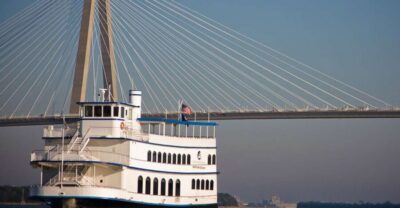
The harbor scenery is a major part of the experience. You get views of the Charleston skyline, the Ravenel Bridge, and the USS Yorktown. These sights give the cruise visual landmarks between stories and help you understand the scale of the harbor.
The Ravenel Bridge is especially striking after dark, when its lights stretch across the water. The USS Yorktown adds a different mood. Its large outline connects the modern harbor to Charleston’s military past, giving the guide another way to discuss war and the city’s changing role.
I would keep your attention on the view as much as on the narration. The cruise is not only a ghost tour with the boat acting as transportation. The harbor itself is one of the main attractions. You see Charleston from a wide angle, with the shoreline gathered into one scene rather than split into separate streets.
The skyline view also makes this a good first or second evening activity. It can help you get your bearings, even though the cruise is not designed as a full orientation tour. Afterward, you may recognize the waterfront and understand how the city’s historic core relates to the harbor.
Is $45 a fair price?
At $45 per person, this is priced above a simple sightseeing ride but below a full dinner cruise. The value depends on what you want from the evening.
I think the price is reasonable if you want three things in one outing: live storytelling, a nighttime harbor view, and a short boat ride with a strong theme. You are paying for the setting and the narrator as much as for transportation. A good guide can turn familiar Charleston sights into part of a connected story.
The price is less attractive if you mainly want a quiet boat ride or a detailed history lecture. The cruise is not described as a meal experience, and drinks cost extra. It also should not replace a daytime visit to Charleston’s historic sites if your priority is architecture, museums, or close-up history.
The 90-minute length helps the value. You get a focused experience without giving up an entire evening. If you are planning a busy Charleston itinerary, that compact schedule makes it easier to fit this cruise between dinner and other activities.
Who will enjoy this cruise most
I would recommend it to adults, older children, couples, and families who like history with a spooky edge. You do not need to be a devoted ghost-story fan. The pirate material, colonial background, Gullah superstitions, and harbor scenery give the cruise several points of interest.
It is also a good choice if you have already walked through Charleston and want a different view of the city. The water changes the scale and mood of places you may have seen from the street.
I would be more cautious if you want a hands-on paranormal investigation, a highly theatrical haunted attraction, or a silent sunset sail. The live guide and stories are the center of the experience. The tour works best when you are willing to listen, look toward the shore, and let the setting do some of the work.
The cruise is offered in English, so you should be comfortable following spoken narration in English. You can reserve now and pay later, and cancellation is allowed up to 24 hours in advance for a full refund. Those policies are useful if your Charleston schedule depends on weather or changing plans.
Should you book the Haunted History Harbor Cruise?
Book it if you want Charleston’s harbor to feel like part of the story, not just a pretty backdrop. The Palmetto gives you a stable ride, the 90-minute format is easy to fit into an evening, and the mix of pirates, ghosts, storms, war, and Gullah folklore keeps the narration varied.
I especially like it for a first evening in Charleston, when the Ravenel Bridge, USS Yorktown, and skyline help you see the city from a fresh angle. Guide Ed’s lively style is another reason to choose it when he is leading your departure.
Skip it if your main goal is a detailed daytime history tour, close views of historic houses, or a dinner on the water. For everyone else, $45 is a fair price for a compact night cruise that gives Charleston a darker, more memorable outline.
FAQ
How long is the Charleston Haunted History Harbor Cruise?
The cruise lasts 1.5 hours, or 90 minutes, and is usually offered in the evening.
How much does the cruise cost?
The listed price is $45 per person.
What kind of boat is used?
You ride aboard the Palmetto, a 45-foot powered catamaran.
What stories are included?
The live narration covers ghosts, pirates, storms, sunken or lost ships, lost fortunes, wars, local ghost lore, and Charleston’s Gullah superstitions.
Which landmarks can I see from the water?
The cruise includes views of the Charleston skyline, the Ravenel Bridge, the USS Yorktown, and waterfront homes connected with ghost stories.
Are drinks included?
No. Drinks, including alcoholic beverages, are available for purchase from the onboard bar.
Where do I meet the boat?
Look for the blue and white Sandlapper Tours ticket booth on the left dock as you approach the water.
New on the water in Charleston
- Private Sunset Harbor Tour 20 passenger party Yacht Kismet★ 5.0 · 6 reviews
- Private Sunset Boat Tour of Charleston Harbor★ 5.0 · 6 reviews
- Harbor History Tour Aboard the Palmetto★ 5.0 · 2 reviews
- Private Afternoon Harbor Cruise on Kismet for parties up to 20★ 5.0 · 26 reviews
- White point Battery and River Run through Charleston Harbor Boat★ 5.0 · 9 reviews
- Mount Pleasant: Charleston Harbor E-Bike Tour★ 4.8 · 5 reviews
- Charleston: Harbor Bar Pedal Boat Party Cruise★ 5.0 · 25 reviews
- Private BYOB Afternoon Harbor Sail On 50ft Sailing Yacht Fate★ 5.0 · 42 reviews
Charleston Harbor Cruises, compared.



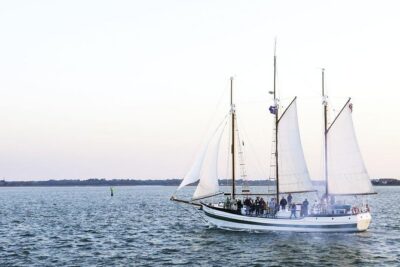
Afternoon Schooner Sightseeing Dolphin Cruise on Charleston Harbor
Read our review →
Narrated Haunted Ghost Cruise of Charleston Harbor
Read our review →
Browse the lists this tour appears in