
REVIEW · GERMANY HARBOUR CRUISES
Duisburg: Guided Walking Tour through the inner harbour
Duisburg’s inner harbour is a case study in how a city can turn industrial decline into a lively waterfront district. On this 1.5-hour walking tour, you’ll connect the old grain trade with the yachts, museums, offices, and restaurants that now line the water.
I like the clear urban story and the mix of maritime atmosphere and modern architecture. The tour also earns points for value at $16, with a German-speaking guide who brings humor and good spirit even when the weather is poor.
The main consideration is language: this tour is offered in German only. Rain will not cancel it, so bring suitable clothing and expect the walk to continue in wet weather.
Key points at a glance
- A former grain port reborn: Learn why Duisburg’s inner harbour was once called the bread basket of the Ruhr area.
- Sir Norman Foster’s city plan: See how a major redevelopment idea changed a declining industrial district from the mid-1990s.
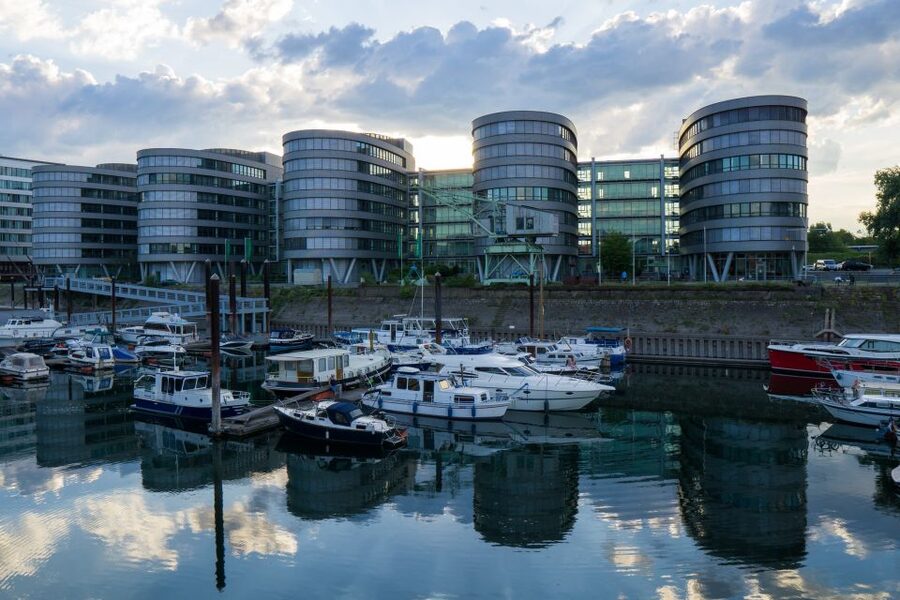
- The Five Boats and marina: Take in some of the area’s most recognizable modern buildings and its yacht-filled waterfront.
- Old warehouses beside new offices: The district’s appeal comes from the contrast between preserved industrial structures and newer architecture.
- Museums and waterside dining: Pair the walking tour with Küppersmühle Museum, the Cultural and Urban History Museum, or a meal beside the water.
- Flexible and accessible: The tour lasts 1.5 hours, is wheelchair accessible, runs in rain, and allows cancellation up to 24 hours before departure.
Duisburg’s former bread basket
The inner harbour did not begin as a leisure district. Its identity came from work, trade, and the constant handling of grain.
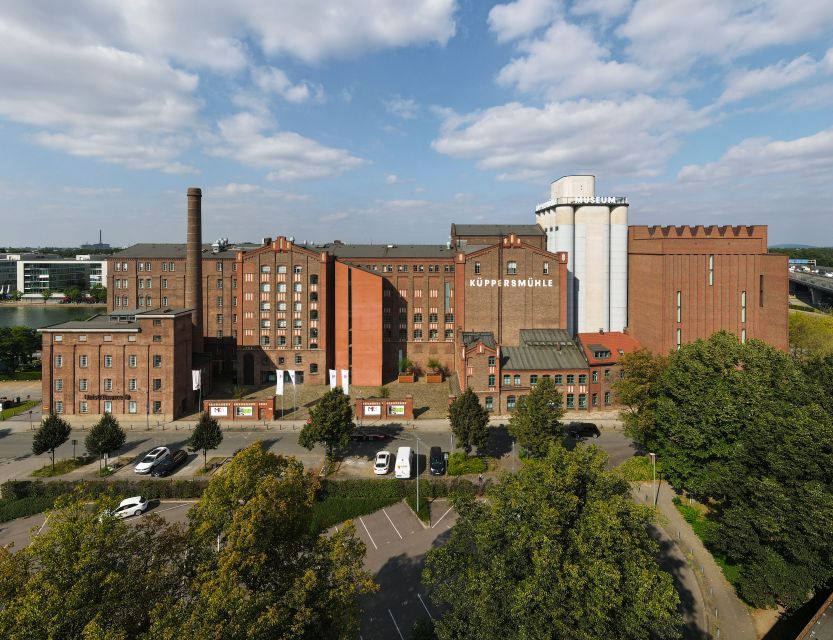
For much of its industrial life, large quantities of grain moved through the harbour. Mills and storage facilities supported the Ruhr area, giving the district its old nickname, the bread basket of the Ruhr area. This background matters because the current waterfront can otherwise look like a simple collection of modern buildings and restaurants.
On the tour, you learn how the harbour’s decline followed the disappearance of the grain mills at the end of the 1960s. Once that trade faded, the old purpose of the harbour faded with it. The district needed a new role, not just a fresh coat of paint.
I find that kind of context more useful than a string of dates. It helps you read the buildings around you. A warehouse row becomes part of a working port. A quiet stretch of water recalls a place once filled with cargo activity. The yachts are not just decoration. They show how sharply the harbour’s daily life has changed.
More Waterfront Walks in Germany:
- Hamburgs Highlights: Harbor Cruise & Reeperbahn Walking Tour
★ 5.0 · 5 reviews - Rotterdam Walking Tour and Harbor Cruise
★ 4.7 · 59 reviews - Reykjavik Food Tour – Old Harbor Walking Tour
★ 5.0 · 41 reviews
Following the plan that reshaped the waterfront
The central idea of the walk is structural change. From the mid-1990s, a plan by British architect Sir Norman Foster helped guide the redevelopment of the inner harbour.
You will hear how the district shifted from an industrial zone into a mixed area with offices, cultural spaces, restaurants, events, and leisure activity. The point is not that the old harbour vanished. Instead, parts of its industrial character were kept while new buildings and uses were added around them.
That balance gives the area its strongest visual feature. You can see nostalgic warehouse rows alongside glittering office complexes. The older buildings help the new architecture make sense, while the modern structures keep the harbour from becoming a museum of its own past.
This is a good tour for anyone interested in city planning, architecture, or the practical side of urban renewal. You are not simply being shown attractive buildings. You are being told why this particular district had to change and what the change looked like on the ground.
The tour does not turn redevelopment into a perfect success story. The appeal of the harbour comes from seeing old and new together, with the water tying everything into one walkable district.
From cargo handling to yachts at anchor
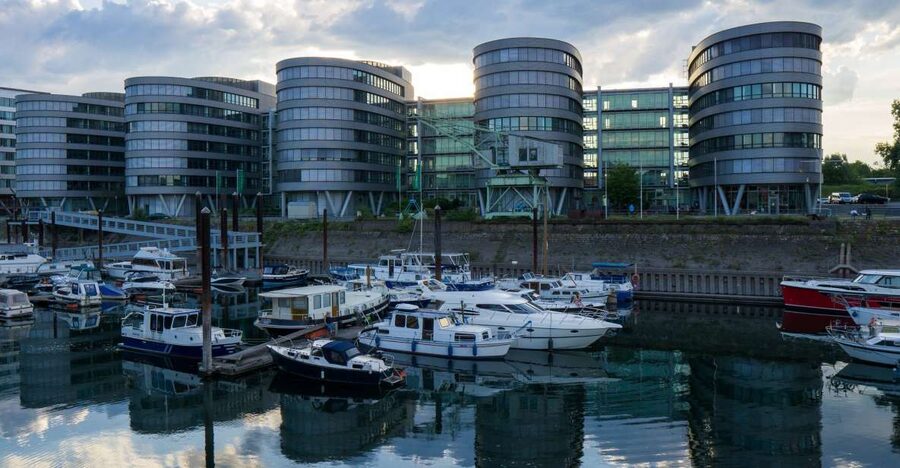
As you pass along the inner harbour, the maritime character remains clear, but the activity has changed. Where freighters were once loaded and unloaded, yachts now sit at anchor.
That contrast gives the walk its most immediate atmosphere. The water, marina, and boats create a relaxed feel that is quite different from the heavy industrial past of the district. Waterside restaurants add to that mood, and you may want to linger before or after the tour rather than rush away when the guide finishes.
The marina is also a useful reminder that redevelopment is not only about office buildings. The harbour now serves several purposes at once: it is a place for business, culture, dining, events, and time beside the water.
I like this part of the experience because it lets you see the change without needing a technical background. The physical setting does much of the explaining. A former freight area now supports a calmer public life, and the difference is easy to grasp as you walk.
Still, the maritime atmosphere is modern and managed rather than rough or working-port gritty. If you want active cargo operations, this is not the place to find them. If you want to understand how an old port can gain a new public role, the harbour is a useful example.
The Five Boats and the modern face of Duisburg
The Five Boats are among the modern architectural features highlighted on the route. They help show the new identity of the inner harbour and give the walk a clear visual marker.
You will also pass modern office buildings, museums, restaurants, and the marina. The variety keeps the route from becoming a single-theme architecture stroll. One moment you are considering the outline of a new building, and the next you are looking back toward older warehouse structures or the water.
The modern buildings are important because they represent the economic side of the harbour’s revival. Offices bring daily activity to an area that once depended on grain and mills. Museums and restaurants add public reasons to visit, even if you have no business there.
This is where the guide’s explanation adds value. Without context, you might see a collection of polished buildings and assume they appeared as one project. The story of the Foster plan shows that the district’s current form came from a deliberate response to industrial decline.
The tour should suit architecture fans, but you do not need to be one. The guide’s job is to make the buildings readable for everyone, and the atmosphere gives the walk an easy visual rhythm.
More Guided Trips in Germany:
- Seattle’s Original Guided Harbor Cruise
★ 4.5 · 2,077 reviews - Rotterdam: Harbor Cruise with Live Guide
★ 4.0 · 1,270 reviews - Seattle: Harbor Cruise with Local Guide
★ 4.8 · 599 reviews - Port Arthur Full-day Guided Tour with Harbour Cruise and Tasman National Park
★ 4.5 · 585 reviews
Museums that make a good second stop
The walking tour takes about 1.5 hours, leaving you time to add a museum visit before or after. Küppersmühle Museum of Modern Art is specifically worth considering if you want to continue with contemporary art and the harbour’s new cultural identity.
The Cultural and Urban History Museum offers a different angle. It can help you place Duisburg and its urban development in a wider setting. If you prefer city stories to modern art, this may be the better follow-up.
The information provided for the tour does not give a detailed route through either museum, so you should treat them as optional additions rather than included stops. The tour itself includes the guided walk only.
I like this pairing because the harbour works best when you give it more than a quick look. The walk explains the district’s transformation from the outside. A museum visit can give you another way to think about the city, its culture, and its past.
You can also simply sit at one of the restaurants beside the water. That is not a minor extra. Part of the inner harbour’s new purpose is to offer a place to pause, eat, and enjoy the setting.
What the 1.5-hour walk feels like
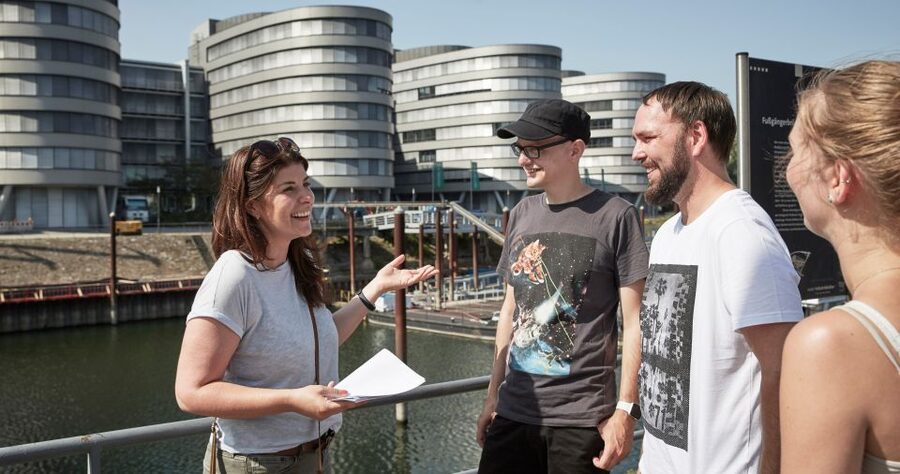
The meeting point is in front of the Mercator fountain, outside Duisburg Town Hall. Your guide waits there, so arrive with enough time to identify the starting area and settle in before the walk begins.
The route then takes you through the inner harbour, with the guide explaining the district’s past, its decline, and the redevelopment that followed. Expect a steady outdoor walk rather than a museum-style talk in one fixed location.
The main sights named for the route include the Five Boats, the marina, modern buildings, museums, restaurants, and the older warehouse rows. The exact order may depend on the guide and the day, but the broad theme remains the same: you are seeing the harbour as a place changed by planning.
A 1.5-hour length works well here. It is long enough to give the redevelopment story some substance, yet short enough to fit around lunch, a museum visit, or another Duisburg activity. You will not spend the whole day on the subject, which is useful if you are building a wider city itinerary.
The walk is wheelchair accessible, an important practical point for anyone who needs a route without avoidable barriers. The supplied details do not specify the exact surface conditions or restroom arrangements, so you should ask the provider if you need those particulars.
Weather, language, and the small practical points
The guide speaks German. If you understand German comfortably, you can expect the full explanation of the harbour’s history and redevelopment. If you do not, this is not the right booking for an English-language tour, since no English option is listed.
The tour operates in rain. That can be a plus if you need a fixed plan, but it also means you should dress for the forecast. A wet day may soften the relaxed waterfront mood, though the walk’s main value, the buildings and urban story, remains the same.
The tour costs $16 per person. I consider that a fair price for 90 minutes with a live guide, especially if you are interested in understanding why the district looks the way it does. You are paying for interpretation, not entry to a museum or a meal, so budget separately for those extras.
The booking terms are useful for a changing schedule. You can cancel up to 24 hours before the tour for a full refund, and you can reserve now while paying later. Those options matter if the weather or your Duisburg plans are still unsettled.
The experience provider is Duisburg Kontor GmbH. The tour is described as wheelchair accessible, which makes it more practical for a wider range of visitors than many older-city walking routes.
Who will get the most from this tour
I would choose this walk if you want to understand Duisburg through its changing waterfront rather than through a list of isolated sights. It suits visitors who enjoy architecture, city planning, industrial heritage, or seeing how former work districts find a new purpose.
It is also a good fit for a short visit. At 1.5 hours, the walk gives you a clear subject without taking over your day. You can follow it with the Küppersmühle Museum, the Cultural and Urban History Museum, or lunch at a waterside restaurant.
Families and mixed-age groups may appreciate the manageable duration and variety of things to look at. The modern buildings, boats, museums, and water keep the walk visually varied, even for people who are not keen on technical architectural detail.
You should think twice if you need an English-language guide or if you want to see an active commercial port. The inner harbour’s story is about what happened after the old port economy declined. Its appeal comes from adaptation, not from watching cargo move today.
The positive feedback attached to this experience highlights two qualities I would value on the ground: the explanation is informative without being dry, and the tone is humorous. One booking made in poor weather still led to an enjoyable walk, helped by the guide’s good mood. That is worth noting because outdoor tours depend partly on the person leading them.
Should you book the Duisburg inner harbour walk?
Book it if you want a concise, affordable introduction to one of Duisburg’s clearest examples of urban change. The $16 price is sensible, and the tour connects the grain trade, industrial decline, Norman Foster’s redevelopment plan, modern architecture, museums, and the marina in one manageable route.
The best plan is to place it beside another harbour activity. Visit Küppersmühle Museum or the Cultural and Urban History Museum before or after, then take time at a restaurant by the water.
Skip it if you need English commentary, dislike walking in uncertain weather, or are looking for a traditional old-town tour. For everyone else, this is a practical way to see how a former working harbour became one of Duisburg’s most active new districts.
FAQ
How long does the Duisburg inner harbour tour last?
The guided walking tour lasts 1.5 hours.
What language is the tour offered in?
The live tour guide speaks German.
Where does the tour begin?
Your guide waits in front of the Mercator fountain, outside Duisburg Town Hall.
How much does the tour cost?
The listed price is $16 per person.
Is the tour wheelchair accessible?
Yes, the tour is described as wheelchair accessible.
Does the tour run when it rains?
Yes. The tour also takes place in rainy weather.
What is included in the booking?
The booking includes the 1.5-hour guided tour.
Can I cancel for a full refund?
Yes. You can cancel up to 24 hours before the tour for a full refund.
Can I reserve now and pay later?
Yes. The reserve-now, pay-later option lets you book without paying on the day of reservation.
New on the water in Germany
- Rostock: Hot Rod Harbor City Tour★ 4.9 · 16 reviews
- Hamburg: Line C Sightseeing Tour Hop On Hop Off and Harbor Cruise★ 3.7 · 8 reviews
- Hamburgs Highlights: Harbor Cruise & Reeperbahn Walking Tour★ 5.0 · 5 reviews
- Hamburg: Hop on Hop off city tour and 1 hour harbor tour★ 4.4 · 3 reviews
- Hamburg: One Hour Traditional Harbor Cruise★ 5.0 · 10 reviews
- Hamburg: Private Harbor Tour by Boat★ 5.0 · 3 reviews
- Hamburg: 1-Hour Harbor Cruise★ 4.4 · 14 reviews
- Hamburg: Harbor Cruise and Bus City Hop-On Hop-Off Tour★ 3.9 · 19 reviews
Germany Harbour Cruises, compared.
Browse the lists this tour appears in