
REVIEW · CHARLESTON HARBOR CRUISES
Harbor History Tour Aboard the Palmetto
Charleston’s past makes more sense from the water. Aboard the Palmetto, you get broad views of Fort Sumter, the Battery, USS Yorktown, and the city’s bridges while a guide connects each sight to battles, pirates, shipwrecks, and plantation days. I especially like the fresh view of the Battery and the chance to pass beneath the Ravenel Bridge, rather than seeing Charleston only from its streets.
I also like the small maximum of 49 people, which should make it easier to hear the in-person guide than on a large harbor vessel. Guides including Ed Macy, Captain Ed, and Captain Mike have been singled out for lively storytelling and humor. The main consideration is that snacks, drinks, and bottled water are not included, and the trip depends on good weather.
Key points to know before you book
- The Battery looks different from the harbor: See its grand homes from the water, including the area linked to the opening shot of the Civil War.
- Fort Sumter anchors the story: The harbor setting helps explain why Charleston became such an important military port.
- USS Yorktown adds a 20th-century chapter: Pass the World War II aircraft carrier at Patriots Point.
- The Ravenel Bridge is part of the ride: The boat passes beneath the long cable-stayed bridge for a memorable city view.
- The guide matters here: Ed Macy, Captain Ed, and Captain Mike are associated with especially strong storytelling and humor.
- Plan for a weather-dependent outing: Free cancellation is available up to 24 hours before departure, with a refund if poor weather cancels the tour.
Why Charleston makes more sense from the Palmetto
Charleston can feel like a city built for walking, and it is. The old streets, church steeples, and houses along the Battery reward a slow stroll. But the city’s location on a large harbor shaped its history just as much as its architecture did.
From the Palmetto, you see Charleston as a port first and a city second. That shift matters. Forts, islands, shipping routes, bridges, and naval vessels begin to form one connected story instead of a set of separate sights.
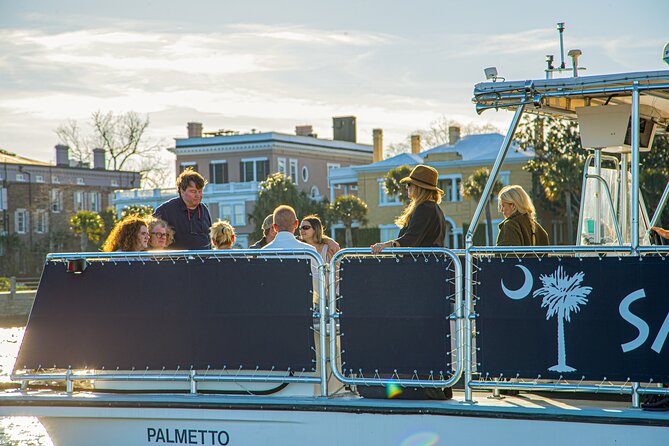
The tour lasts approximately two hours and returns to the Charleston Maritime Center at 10 Wharfside Street. You will have an in-person guide, and the group can include up to 49 people. That is not an intimate private cruise, but it is far more manageable than a large sightseeing boat carrying several hundred passengers.
The tour price is $45 per person, including taxes and fees. I consider that fair if you want both sightseeing and interpretation. You are not paying simply for a ride around the harbor. The value comes from seeing several major sites in one outing while learning how they relate to Charleston’s military and maritime past.
More History Tours in Charleston:
- Charleston: Daytime or Sunset Historic Harbor Cruise
★ 4.5 · 1,352 reviews - Charleston: Historic City Tour and Harbor Cruise
★ 4.5 · 260 reviews - Charleston: Haunted History Harbor Cruise
★ 4.2 · 22 reviews
Leaving the Charleston Maritime Center
The starting point at the Charleston Maritime Center is practical for a day spent near the historic center. The boat returns to the same place, so you do not need to arrange a separate ride from the end of the tour.
Bring a mobile ticket and arrive ready for an outdoor experience on the water. The supplied details do not promise snacks, soda, alcohol, or bottled water, so bring water if you need it and eat beforehand. Those small preparations make a difference during a two-hour outing.
The harbor can offer a much wider view than the narrow streets downtown, but it also leaves you exposed to the weather. This trip requires good conditions. If the operator cancels because of poor weather, you can choose another date or receive a full refund.
Seeing the Battery from the harbor
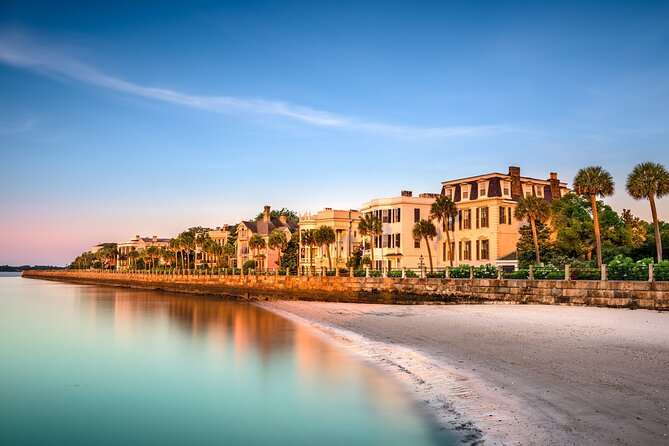
One of the most useful parts of the tour is the view back toward Charleston’s Battery. The Battery is famous for its stately homes and waterfront position, but from land you mostly experience it at street level. From the Palmetto, you can see how the houses face the harbor and how closely the city’s defenses and port activity were tied to this shoreline.
The Battery also carries a direct connection to the opening of the Civil War. General Beauregard observed the first shot from this area in 1861. The point is not just to attach a famous date to a pretty row of homes. From the boat, you can better understand the military value of the position and the commanding view across the water.
I like this portion because it adds scale. You are not simply photographing historic houses. You are looking at the waterfront as a place where decisions were made, ships moved, and Charleston’s leaders watched events unfold.
Keep your expectations sensible. The tour passes these sights from the water, so it is not a substitute for walking the Battery or touring individual houses. You will see the setting and hear its story, but you will not go ashore for a close architectural visit.
Fort Sumter and the harbor’s military story
Fort Sumter is one of the main reasons this harbor tour works so well. The fort sits in the water, where its position is easier to understand than it is from a distant map or a short mention in a museum.
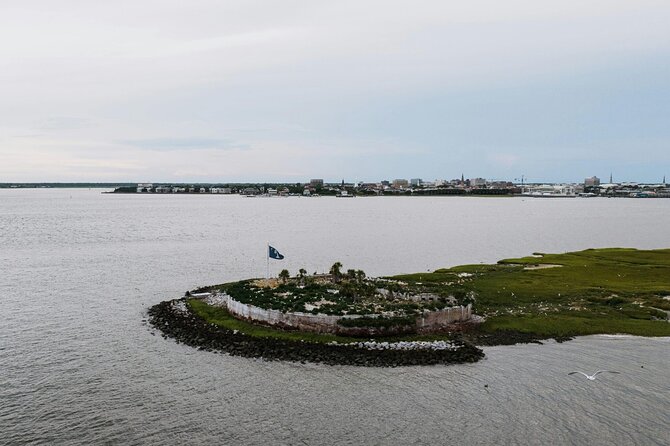
The harbor setting shows why Charleston mattered during the Civil War. Fort Sumter helped control access to the port, and its location made it part of a larger defensive system that included other forts and islands. The boat does not turn this outing into a full fort visit, but it gives you a strong geographical introduction.
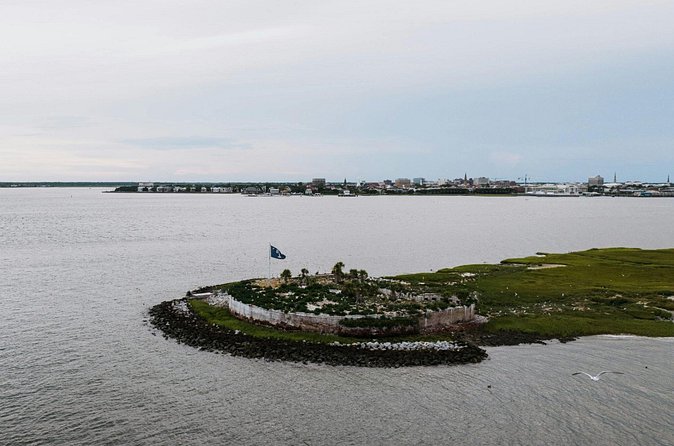
You will also hear about Castle Pinckney, another defensive site in the harbor. Seeing Fort Sumter and Castle Pinckney in the same broad setting helps you picture the layers of protection around Charleston.
This is a good choice if you want context before visiting a fort on another day. It is also useful if your schedule does not allow an additional shore excursion. Just remember that a water view is different from entering a historic fort. The tour gives you the setting, narration, and photographs, not an extended walk through the structures.
A few more trips on the water in Charleston worth a look
- Charleston Harbor Sunset Cruise
★ 5.0 · 905 reviews - Charleston: Luxury Harbor Dinner Cruise
★ 4.3 · 786 reviews - Charleston: Sightseeing Harbor Tour & Dolphin Watch
★ 4.5 · 649 reviews - Afternoon Schooner Sightseeing Dolphin Cruise on Charleston Harbor
★ 4.5 · 620 reviews
Passing USS Yorktown at Patriots Point
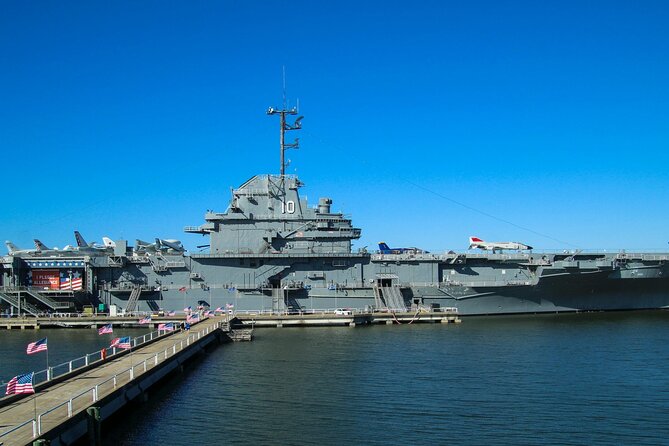
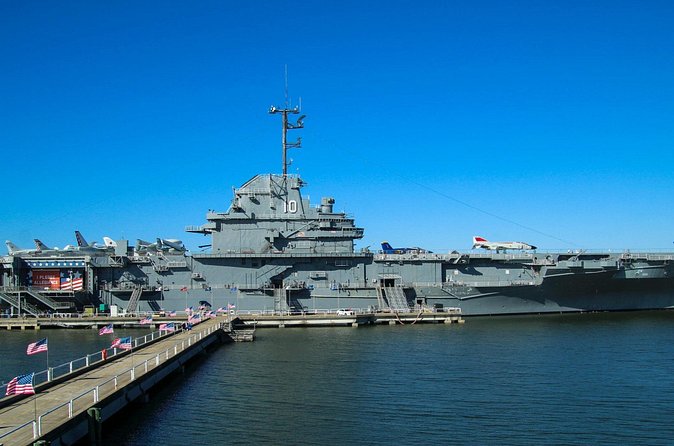
The Palmetto passes USS Yorktown, one of 24 Essex-class aircraft carriers built for the United States Navy during World War II. The ship adds a later chapter to the harbor story, moving the focus from colonial defenses and Civil War battles to America’s 20th-century military power.
From the water, the carrier’s size is the main impression. You see a vessel built for aircraft operations and wartime service, not simply another ship tied to a pier. That contrast makes the stop worthwhile even if you do not have time to tour the Yorktown itself.
The tour only passes by the carrier. If you want the full museum experience, including an interior visit, you would need a separate visit at Patriots Point. Still, seeing the ship from the Palmetto places it within the working harbor rather than treating it as an isolated exhibit.
This portion should appeal to families and anyone who likes naval history. An 11-year-old can follow the basic story of a giant aircraft carrier, while the guide can add the historical details that make the ship more than a large object on the horizon.
Under the Ravenel Bridge
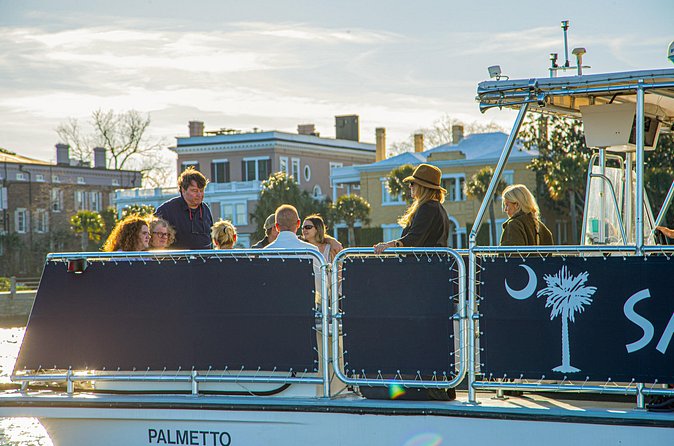
Passing beneath the Arthur Ravenel Bridge is one of the tour’s clearest visual moments. The bridge is a long cable-stayed structure and a major part of Charleston’s modern skyline. From the boat, you get a low angle that pedestrians and drivers cannot match.
The guide also explains that the structure was designed to withstand shipping accidents and the natural disasters that have affected Charleston. That detail connects modern engineering to the same forces that shaped the city’s older defenses: water, storms, heavy ships, and the risks of a major port.
I like this part because it keeps the tour from becoming only a lesson in the colonial and Civil War past. Charleston is a living port city, and the bridge shows its present-day scale.
The bridge crossing is also a natural change of pace. After forts and historic houses, the boat moves into a broad modern view of the skyline. Have your camera ready, but do not spend the entire passage looking at a screen. The angle changes quickly as the boat moves beneath the span.
Lighthouses, islands, and open harbor views
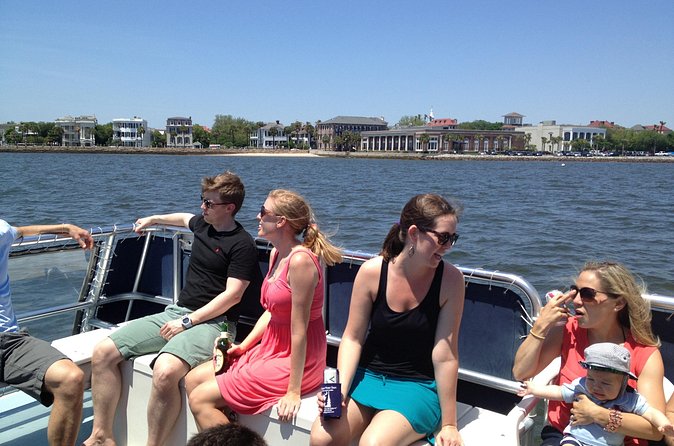
The tour also takes in Fort Moultrie, the Morris Island Lighthouse, and the Sullivan’s Island Lighthouse. These sights spread the story beyond the central waterfront and show how Charleston depended on markers, forts, and coastal defenses to guide and protect ships.
Lighthouses can be easy to overlook when seen from shore. From the water, their purpose becomes clearer. They belong to the working edge of the harbor, where ships needed help finding safe routes and where the coastline could be difficult to read.
The two-hour format allows the tour to cover a lot of ground. That is a strength, but it also means some sights may pass at a distance. You should choose this experience for the overall picture, not for a detailed examination of every lighthouse or fort.
The open views are especially useful early in a Charleston visit. They help you orient yourself before spending more time on foot. You begin to see the city, islands, bridges, and waterways as parts of one place.
Stories beyond dates and battle lines
The guide’s storytelling is central to the experience. The material covers pirates, shipwrecks, plantation days, famous battles, naval history, and Charleston’s long relationship with the sea.
This mix gives the tour a wider reach than a narrow Civil War cruise. You can connect military events with trade, shipping, coastal dangers, and the people who lived around the harbor. The best moments are likely to come when the guide links a visible place to a human story.
Ed Macy is associated with the history presentation, while Captain Ed and Captain Mike are named as part of the crew. The information provided does not guarantee which specific guide or captain will be working on every departure, so you should treat those names as examples rather than a promise.
The tone also appears to include humor. That matters on a history tour, especially for families. An 11-year-old may not stay engaged through a long list of dates, but a funny story about a shipwreck or a local character can bring the setting to life.
At the same time, the quality of a live tour can vary with the individual guide, weather, and group. You are choosing a guided harbor experience, not a recorded audio program with a fixed script. That can make the outing more personal, though it also means the exact emphasis may change.
Is $45 a good value?
At $45 per person, this tour sits in a reasonable range for a two-hour guided harbor outing. Taxes and fees are included, and you see a long list of major sights without paying for separate transportation between them.
The strongest value comes from combining several types of sightseeing:
- Historic waterfront homes and the Battery
- Civil War sites such as Fort Sumter and Castle Pinckney
- Coastal defenses including Fort Moultrie
- USS Yorktown and modern naval history
- Lighthouses, islands, the skyline, and the Ravenel Bridge
You are also paying for a guide who can explain what you are seeing. That makes the price more useful for a first visit or for anyone who wants context rather than a silent cruise.
The value drops if you want to step ashore at Fort Sumter, enter USS Yorktown, tour a lighthouse, or spend long periods at one site. This is a moving overview. You see more places, but you do not explore them in depth.
Food and drinks are not included. That is normal for this kind of outing, but remember to plan for it. Alcohol, soda, snacks, and bottled water are specifically excluded.
Who will enjoy this harbor tour most?
I would recommend the Palmetto to first-time visitors who want to understand Charleston’s layout quickly. It also suits repeat visitors, since the view from the water changes familiar sights and can reveal how the harbor shaped the city.
Families are a good match, especially if children enjoy boats, bridges, aircraft carriers, or military stories. The experience is listed as suitable for most people, and service animals are allowed.
History fans will appreciate the number of subjects covered, but you should not expect a specialist lecture on one era. The tour moves from early Charleston to the Civil War, World War II, and modern engineering.
This is less ideal if you dislike open-water outings, need a guaranteed indoor activity, or want a quiet cruise without narration. Weather can cancel the trip, and the group may include as many as 49 people.
Booking, cancellation, and practical details
You receive confirmation when you book, and a mobile ticket is accepted. The meeting point is the Charleston Maritime Center at 10 Wharfside Street in Charleston, South Carolina. The tour ends back at that same meeting point.
Free cancellation applies if you cancel at least 24 hours before the local start time. Changes or cancellations made inside that window are not accepted and are not refunded.
The experience requires a minimum number of participants. If the minimum is not met, the operator can offer another date or experience, or provide a full refund.
I would check the weather before leaving for the dock, even though a forecast can change. Since the outing depends on good conditions, a flexible schedule is useful.
Should you book the Palmetto?
Book this tour if you want a lively, efficient introduction to Charleston’s harbor and the forces that shaped the city. The Battery, Fort Sumter, USS Yorktown, lighthouses, and Ravenel Bridge create a strong mix of old and new, while guides such as Ed Macy, Captain Ed, and Captain Mike bring personality to the route.
Skip it if your priority is an in-depth visit inside one fort or museum. For most people, though, $45 is a sensible price for two hours of views, local stories, and useful orientation. I would place it near the start of a Charleston visit, when the harbor perspective can help you make better sense of everything you see afterward.
FAQ
Where does the Harbor History Tour aboard the Palmetto begin?
The tour begins at the Charleston Maritime Center, 10 Wharfside Street, Charleston, SC 29401.
Where does the tour end?
The activity ends back at the Charleston Maritime Center, the same place where it begins.
How long does the tour last?
The tour lasts approximately two hours.
What sights can I see from the boat?
The route includes views of Fort Sumter, Castle Pinckney, USS Yorktown, Fort Moultrie, the Morris Island Lighthouse, Sullivan’s Island Lighthouse, the Arthur Ravenel Bridge, and the Battery’s historic homes.
Are food and drinks included?
No. Snacks, alcoholic beverages, soda, and bottled water are not included.
Can I cancel for a refund?
Yes. You can cancel at least 24 hours before the experience start time for a full refund. If poor weather cancels the tour, you will be offered another date or a full refund.
New on the water in Charleston
- Private Sunset Harbor Tour 20 passenger party Yacht Kismet★ 5.0 · 6 reviews
- Private Sunset Boat Tour of Charleston Harbor★ 5.0 · 6 reviews
- Private Afternoon Harbor Cruise on Kismet for parties up to 20★ 5.0 · 26 reviews
- White point Battery and River Run through Charleston Harbor Boat★ 5.0 · 9 reviews
- Mount Pleasant: Charleston Harbor E-Bike Tour★ 4.8 · 5 reviews
- Charleston: Haunted History Harbor Cruise★ 4.2 · 22 reviews
- Charleston: Harbor Bar Pedal Boat Party Cruise★ 5.0 · 25 reviews
- Private BYOB Afternoon Harbor Sail On 50ft Sailing Yacht Fate★ 5.0 · 42 reviews
Charleston Harbor Cruises, compared.



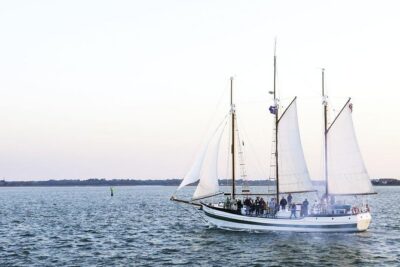
Afternoon Schooner Sightseeing Dolphin Cruise on Charleston Harbor
Read our review →
Narrated Haunted Ghost Cruise of Charleston Harbor
Read our review →
Browse the lists this tour appears in